(Journal — Architecture)
Brick, lime plaster and teak: what ages well
· WORDS BY
A. Kulkarni
Some materials look their best on handover day. Others take ten years to get there. A short guide to the second kind.
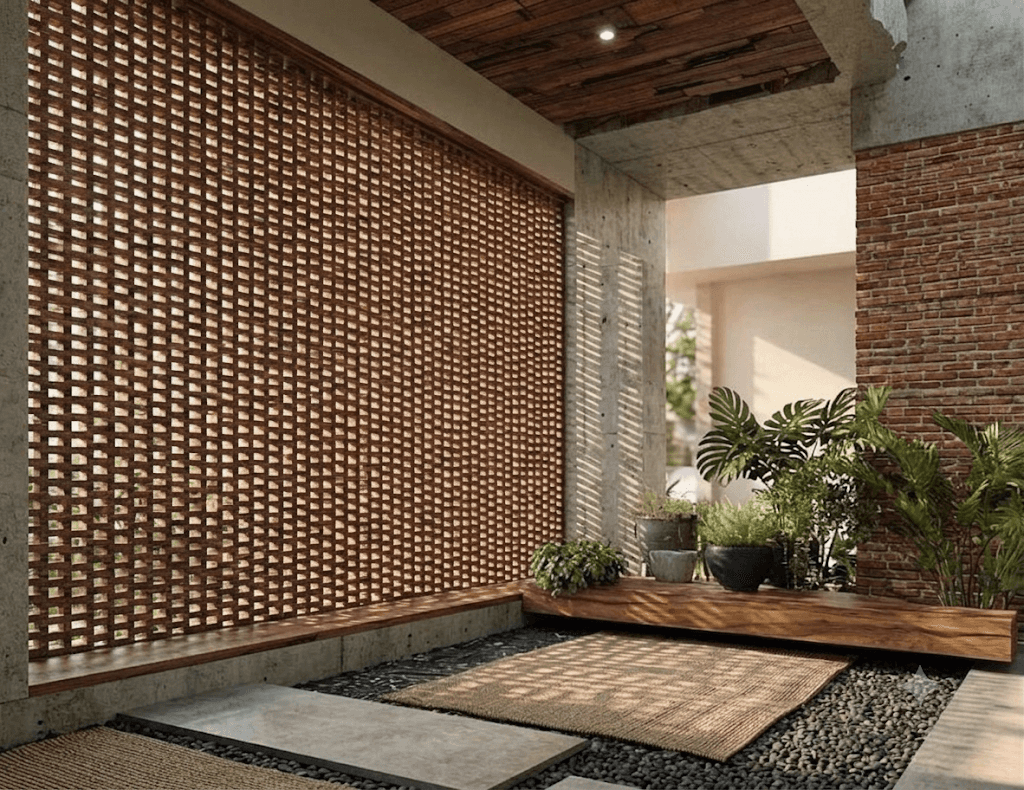
THE BRICK SCREEN AT THE SANCTUARY, LONAVALA
CATEGORY
Architecture
PUBLISHED
WORDS
A. Kulkarni
Some materials look their best on handover day. Others take ten years to get there.
Brick is the clearest example. A new brick wall looks sharp and a little raw. After a few monsoons the colour deepens and the joints soften, and the wall starts to look as if it belongs.
Lime over cement
Lime plaster moves with a building where cement plaster cracks. It takes on a slight unevenness that catches light well, and small marks can be patched without repainting a whole wall.
Teak goes silver outdoors if you leave it, or stays warm if you oil it once a year. Either way it lasts, which is why it is used for the screens and doors that get the most weather.

BATH COURT — THE SANCTUARY

PRIMARY SUITE — THE SANCTUARY
Ask what a house will look like in ten years, not on the day you get the keys.
What to look for
Run a hand over the walls and look closely at the edges of doors and windows. Materials that age well are usually left visible. Materials that do not are usually painted over.
At The Sanctuary the brick screen, the lime walls and the teak frames are all left as they are. That is a good sign in any house.
(MORE ARTICLES)

Architecture
·
Why a courtyard changes how a house sounds
A court does more than bring in light. It puts a quiet room of open air between you and the street, and the whole house settles around it.

Buying
·
Reading a floor plan before you visit
Five things to look for on a plan before a viewing, from where the light comes in to how far the kitchen is from the table.

Places
·
Lonavala, out of season
After the monsoon crowds leave, the hills go quiet. Notes on what the town is like to live in from October to May.